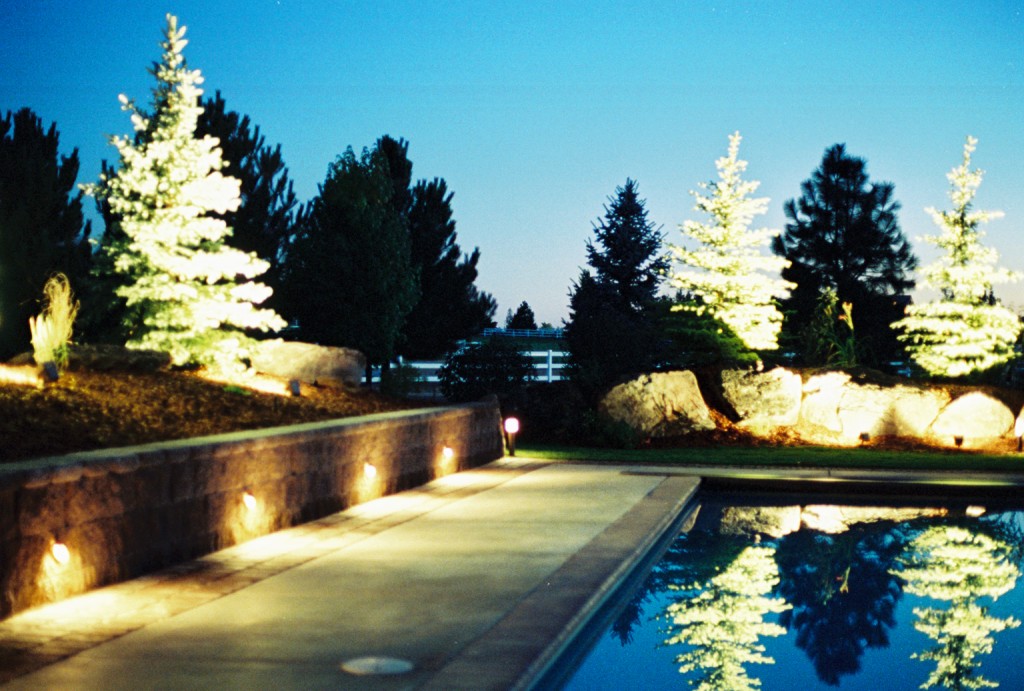
Bollard Lights are a very specific type of outdoor light, sometimes referred to as post
Lights because of their design. The word Bollard stems from the nautical term used to describe the specific type of post that ships would tie to when they were docked.
The earlier fixtures, keeping with this sailing theme, had a nautical
look to them with a cylindrical post and rounded top. This style is
still readily available but as the demand for outdoor Lighting increases and the styles evolve to meet the needs so have the available styles of Bollard Lights. You can now find a variety of styles and sizes of these type of Lights.
Residential Uses
While Bollard Lighting is most commonly used for outdoor commercial Lighting or in public areas these Lights can also be used quite effectively in residential areas as well. Residential Bollard Lighting can be used to create an attractive Lighting
design that will help create a cozy outdoor environment. It can also be
used for added security or to increase visibility at night.
The residential areas are where most people want to take advantage of
the newer decorative styles available like the zen, mission or column
style Bollard Lights. Some of these styles can really add
distinction to your yard while adding better visibility. They can also
be incorporated into a Landscape design that will enhance both the look of the light itself and the landscaping.
They can be used at the beginning of a driveway, by the entrance to the
home, to light outdoor stairs or around the deck or patio. How to use
them best will depend on the size and shape of the yard. Mini or compact
Bollards can also be a great addition to a garden or Landscaped area of the yard.
Business Uses
Bollard Lights are popular type of outdoor commercial Lighting. They are most commonly used to light pathways; typically a row of evenly spaced Lights are used to illuminate the path. But they can also be used in Landscaped areas of the parking lot to add additional light to the parking lot and to the Landscape
design, or at the entry of a building to add light and create a safer
environment at the entryway. Sometimes they are used to light the
company sign or logo at a business.
Other Uses
Bollard Lights also work well at parks, pedestrian malls
or in community owned neighborhood association areas. They can be used
to create a distinct separation between pedestrian areas and areas used
for vehicle traffic. They can be used along paths. They can also simply
be used strategically to add light for increased safety and visibility.
Because Bollard Lights are durable and weatherproof they are perfect for a variety places where outdoor Lighting is wanted or needed.
In essence, for as long as humans have been around, Landscape Lighting has been a part of society. Landscape Lighting is not only used for aesthetic appeal, but also for safety, and simply for light to be able to see where you are going.
Prior to the introduction of electricity as the main power source for lights, Landscape Lighting was powered by gas, and before that, there were candles and torches or lanterns covered with animal or plant oils.
If you consider Landscape Lighting any Lighting that is used outside, it is certain that you would be able to come up with many forms of it. Street lights, lit up signs, and even your porch light.
What is more interesting though, in the opinion of many Landscapers, is Lighting used to add dimension and appeal to outdoor features. Below are a few ideas of ways to use Landscape Lighting to make your home more unique and beautiful.
Adding lights along your driveway is like calling out to your guests "you have arrived!" It makes a first impression on visitors that they will not soon forget because of the beautiful entrance it provides to your property.
Lighting a water feature truly brings it to life. Of course a water feature is beautiful on its own, but when you add illumination to the feature, you are adding so much more than just light. You are adding reflection, sparkle, and vibrance. The light also makes the water feature more visible in the night when you invite people over to your home for parties or dinners. You may not have fountains like the Bellagio in Las Vegas, but with the right illumination, your home water feature could add a lot to your overall Landscape.
When you add light to the side of a building or to the side of your home, you draw attention to it in a positive way. A home with Landscape Lighting that points to the walls outside of the house seems to glow at night. It shows that you are confident in your home and you want people to notice the beautiful details of it throughout the whole day and night. Consequently, Lighting the outside of your home makes it less of an attractive stop for burglars. Burglars cannot creep unnoticed through your yard and up to your home when you have high powered Landscape Lighting illuminating the whole area.
So whether it is for safety, general Lighting of a street or walkway, or to add beauty and aesthetic appeal to a home, Landscape Lighting is a great investment.
If you have ever walked through a yard with a professionally installed Landscape Lighting system, then you know exactly how enchanting it can make even the most ordinary yard feel. With the help of your electrician, you can come up with a plan to create an original, and inviting atmosphere in your yard, with just a few simple Low Voltage lights. Furthermore, appropriate Lighting can actually make your property safer, as it reduces places for people to hide.
Whenever you arrive back at home in the middle of the night, having appropriate Lighting can make you feel much more safe and secure. You can use Lighting to light a path, highlight certain features or just provide light in areas that are prone to shadows. These lights can help make sure that you always get to where you're going safely. By using Low Voltage Lighting, you can avoid being the annoying neighbor who has bright lights pointed in every which direction.
In addition to these benefits, Low Voltage Landscape Lighting is very appealing due to its affordability. This makes them ideal for a variety of areas around your home, including front Landscape beds, decks and backyard pool areas.
Although there are a variety of options that you can install yourself, there are some definite benefits to working with a professional when it comes to installing your Landscape Lighting. While store-bought Lighting kits may be appealing due to their Low price and seemingly simple installation, working with a professional is the best option for the long run. Although this typically comes at a higher price, the resulting product is much more polished, long lasting and properly installed. As a rule, your electrician installs high quality Lighting that is built to withstand years of use under a variety of weather conditions. Furthermore, professionally installed outdoor Lighting systems do not rely on unsightly converter boxes and unburied cables. Instead, your electrician will bury any required wiring and place any necessary boxes out of sight.
If you do decide to install your own outdoor Landscape Lighting, one of the most popular options is solar powered lights. In contrast to older Lighting systems, solar powered garden lights do not need any of the cords and transformers that can clutter up your garden. Instead, solar lights are equipped with very small solar panels that charge a rechargeable battery throughout the day. Whenever it is dark, a photovoltaic sensor turns the lights on, utilizing the power that was collected throughout the day.
Regardless of the route that you take for your new Landscape Lighting project, you will be amazed by how much of an effect it can have on your garden, outdoor living space or other parts of your home. With the addition of just a few lights, you can effectively turn a dark and uninviting outdoor space into a comfortable, safe and inviting atmosphere.
With the introduction of the LED Lighting Landscape and specialty Outdoor Lighting options, even more doors have been opened for crafting unique Lighting setups based on the spec
ific needs of the contractor.
Outdoor Lighting design used to be an expensive endeavor done professionally only when commissioned by commercial clients or those willing to pay a pretty penny. Anyone just looking to liven up their own homes had to figure it out for themselves and experiment with setups until they found one that suited their needs and budget. Thanks to innovations in LED Lighting Landscape, homemade designs are starting to look more and more like commissioned specialty Outdoor Lighting configurations. LED bulbs are versatile, sturdy, and long-lasting, making them the perfect medium with which to experiment if you're new to the field.
Outdoor Lighting design blogs exist for the sole purpose of helping greenhorns learn more about the craft through exchange of ideas and tips for how to improve past projects. Learning from each other's mistakes is only possible in community, and an online presence of those interested in the LED Lighting Landscape conveniently makes that possible. Expert designers and even commercial companies occasionally jump in as well to give advice free of charge, so be on the lookout! Some basic scouting can yield extensive information on the following topics.
The first thing to consider when beginning your design is the purpose. What do you want the light to show, and to whom? More often than not, specialty Outdoor Lighting will serve multiple needs at once, including aesthetic enhancement of your home's exterior, specific showcasing of features such as gardens or fountains, and increased security through illumination of surrounding areas. You don't have to choose just one function when drafting a design, but it is important to make sure that you take them all into consideration from the get go.
Another important topic is how weatherproof you need your Lighting to be. If it is going to be fully exposed to the elements, then a hardier variety of bulb is what you're looking for. Depending on the climate, you best choice for glass will vary, so make sure to ask at your local hardware store what they recommend.
Additionally, it is always a good idea to check with neighborhood associations about policies regarding Lighting design. Most residential communities welcome decorative light for both its beautification and safety benefits, but it never hurts to run your ideas by the neighbors first to avoid having to undo any of your hard work. The most important part is that you're satisfied with the finished product, so take your time along the way and never be afraid to ask questions as you go!
Determining an ideal Luminaire Lighting Design can prove to be extremely valuable when choosing a Luminaire for your home, garden, or place of business. Design has a huge part in influencing not only aesthetics, but durability, servicing, convenience of operation, and the lifetime of the Luminaire. When determining the appropriate Luminaire Lighting Design, thoroughly take into consideration the variety of requirements the Luminaire will need to fulfill. Purchasing a Luminaire Lighting Design unsuitable for the application it is being employed for could lead to a lot of needless trouble in addition to potentially squandered income.
Do you need Luminaire Lighting to provide surrounding illumination for studying and analyzing important documents? If so, you will need to closely examine the direction in which the Luminaire disperses light emanating from the bulb. Is there a sufficient amount of light to illuminate a good sized location or will it merely handle smaller areas? Is the power switch effortless to reach and thus control from a laying down or seated position? Can the particular location of the lamp shade be fine-tuned without needing to shift the entire position of the Luminaire base? These are the types of questions in need of asking when selecting a Luminaire suitable for your personal office needs.
If you're searching for a Luminaire Lighting Design that can be used out of doors, some critical factors in need of consideration include the endurance level of the Luminaire and its ability to withstand harsh environmental conditions. The Luminaire must be able to safely guard the internal electrical components from hard rainfall, extensive snowfall, and hail. The cord used in hooking up the Luminaire to the electrical power supply must also be ideal for resisting weather without resulting in a dangerous power supply emergency. In order to minimize frequent replacing of the light bulb, the light bulb must be long-lasting, cost-effective and consume power in an energy-efficient manner. The procedure used for installing the Luminaire must also be taken into account. Can it be placed directly into dirt and debris, or does it require specialized fasteners so it can be be affixed to brickwork?
If a Luminaire Lighting Design that can cater to your place of work or an industrial area is desired, you may want to consider a Luminaire that can be recessed in a ceiling or wall and will therefore be placed out harm's way. Luminaires capable of fitting inside wall spaces, ceilings, and cavities formed inside floorboards are readily available. Any time you are making use of recessed Lighting for your place of work, you will ultimately want to take into consideration the level of brightness being directed. Currently, scientific studies have confirmed that assorted levels of light have a remarkable influence on laborer efficiency. However, the quality of Lighting needed for optimal productivity can change extensively for each individual. Be sure to take into account the well being of the employees when buying a Luminaire Lighting Design proper for the workplace.
Why would one want a Luminaire Lighting Design ideal for mounting among floorboards or inside wall structures? Luminaires of this variety are mainly used for cosmetic purposes. They are typically found where illumination is used to create a specific atmosphere or needs to emphasize creative and captivating attributes of the surrounding architecture. Common venues where cosmetic Lighting is used include dance clubs and art galleries.
With properly installed Landscape Lighting, you can greatly change the look and atmosphere of your outdoor spaces. This is a great way to increase the safety, function and look of your entire yard. Many people choose to start with just one flowerbed, tree or outdoor living area. Regardless of the size of your Lighting project, there are many options and Lighting packages available. While it may be tempting to do it all yourself with a DIY Lighting kit, you should also consider having your Landscape Lighting professionally installed by a licensed electrician. Professionally installed Landscape Lighting often looks better and lasts longer than its DIY counterparts.
Using DIY Lighting Kits
You can find DIY Landscape Lighting kits at nearly every store in town. They are available in a range of styles, sizes and levels of quality. In general, this route is much cheaper than having your Lighting installed by an electrician. The tradeoffs, however, can be greater than you think. Unless you go with a very high-end Lighting kit, most DIY kits will be nowhere near the quality of the lights that an electrician will use. As a result, your lights will wear quicker, leading to a shorter lifespan and diminished aesthetic value. Furthermore, many DIY kits leave you with unsightly wires, converter boxes and other items that will not exist in a professional installation.
Professionally Installed Landscape Lighting
Landscape Lighting is not typically the first thing that you think of when you think about the services that are provided by the typical electrician. Many electricians, however, specialize in the installation of great-looking, long-lasting Landscape Lighting. Utilizing the services of an electrician means that you will have the utmost ability to customize exactly how you want your Landscape Lighting to look and function. This means that you can reach all of the hard-to-reach places, light all of your trees and ensure that your Lighting will not disturb any cars that are passing by. Most electricians use very high quality, metal fixtures that can use higher-output bulbs than their plastic counterparts. This means that your Lighting will function more efficiently than if you had gone with a plastic DIY kit. Furthermore, metal fixtures are sealed from the elements, giving them a much longer lifespan.
In addition to accenting trees and showing off flowerbeds, Landscape Lighting also has a very functional purpose. If you have outdoor walkways, decks or other living spaces, well-placed Lighting can turn them into great places to be both day and night. Rather than stumbling around in your backyard at night, you can safely walk any paths, and enjoy company on your deck at all hours of the day. Because every home is different, a custom application can be very important to the overall look and function of your finished exterior Lighting project. Consider working with your electrician to make sure that everything works just the way you want it to.
Thinking up a few good Landscape Lighting Ideas may be a bit challenging for some people. However, it need not be that hard, and it can actually be a pleasant if not fun experience. These 7 easy tips will show you how to use your creative imagination to easily come up with your own great Lighting Ideas for your landscaping.
Think About Any Unique Features That Would Benefit From Lights
During the daylight hours when the sun is shining bright, some Landscape features may look rather unremarkable, if not mundane. But at nighttime, tastefully placed Lighting can bring out a spectacular variety of colors, hues, and effects.
Places that can benefit from Lighting include driveways, walkways, walls, steps, statuary, water fountains, trees, shrubs, patios, decks, and borders.
Use a Flashlight to Simulate Nighttime Landscape Lighting Effects
When nighttime falls, get a flashlight, put in some fresh batteries, then take a walk through the Landscape areas such as lawn, garden, and pathways that you would like to light. The reason for bringing the flashlight along is to simulate different Lighting effects.
Point the flashlight at objects you would like to light, and shine a beam of light on it. See how the beam of light creates various Lighting effects, contrasts, and shadows on the wall of your house, on trees, shrubs, and other elements of the Landscape. If your flashlight has variable settings, change the width of the beam between floodlight and spotlight, and make note of positioning and angles that you think look best.
Visualize Effects Mentally
Next, try to visualize in your mind a few different ways you can re-create the flashlight simulated effects with common Lighting methods.
Some of the popular Lighting methods include path Lighting, wall-wash Lighting, shadow Lighting, floodLighting, spotLighting, backLighting, downLighting, and upLighting. See your Landscape come to life at night after you install some low voltage light fixtures in a few strategic locations onsite.
Write Your Ideas in a Notebook
When you have some good Lighting Ideas, write them down in a notebook or personal organizer as soon as possible. You shouldn't assume you will remember all of those Ideas you have in your head, because you may forget something important.
Draw a simple map of your Landscape layout, and plot each point where you want to place a light fixture. When you are ready to purchase your light fixtures at the store, take your notes with you so you can refer back to them if necessary. This holds true if you buy online as well.
Use Online Search to Find More Ideas
For even more Ideas, go online to conduct a search. You will find a virtual goldmine of information online about many different topics, including that of Landscape Lighting. Performing a few quick searches online is a good way to find more Ideas.
Search Online With Specific Keywords
A generic phrase like "Landscape Lighting" may return some results that are not completely relevant to your search, such as product sale pages. Do a search with targeted keywords, like "Landscape Lighting methods" or "outdoor Lighting Ideas." Home improvement sites, DIY sites, forums, and answer sites such as eHow, Yahoo Answers, and Google Groups are good places to search for more Ideas.
Books and Magazines - Take a Look!
Besides searching online, don't forget about home-and-gardening books and magazines for even more helpful Landscape Lighting articles and advice. So be sure to check out the books and magazines in the self-help section of your local home improvement store or Landscape nursery.
The things you can do with Lighting are virtually limitless, given the endless number of Landscape Lighting Ideas available today. Let your creative juices flow, use your imagination, and go for it with gusto! By Lighting your Landscape at night, you will increase the beauty of your outdoor areas and improve the level of security and safety.
Once an afterthought, today's exterior spaces are becoming an extension of the interior of the home. Not only does a well-conceived Outdoor space increase the comfort of the home, but it can also increase the home's value.
One of the keys to creating a superior Outdoor escape is Lighting. While any deck or patio can serve admirably in the daytime or even twilight, only those with Outdoor Lighting can truly own the night.
If you are thinking about adding Lighting Outdoors, you'll probably want to do some planning. Lighting is not a haphazard activity - you want to make sure that the Lighting is appropriate, covers the spaces you want, and doesn't leave any dark spots, especially near stairs or transitions between different levels of a deck.
Installing lights not only increases the usefulness of your property, but also the safety of your home. And, with the low wattage Fixtures coming out on the market and the growing number of solar powered lights, installing Lighting is also cost effective.
If you have a deck or patio, you may want to consider recessed lights. These are installed right into the floor and are flush, giving you dramatic Lighting that adds resale value to the home. These can be costly to install, however, largely because you'll need to hire an electrician. But the visual impact and curb appeal is worth it.
Another good option for Outdoor Lighting is to put lights on the post caps around the deck. These can be extremely decorative in the daytime and will cast a lovely light on the deck without it being too bright or obtrusive. Alternately, you can go with lights mounted on the posts themselves, either down at the deck level to provide Lighting along the surface or a little higher up to illuminate the entire deck.
If you have tall posts, you can go with lanterns for Outdoor Lighting. These work really well around the edge of a deck or patio or around the pool or hot tub.
If the wiring of the deck is a roadblock to Outdoor Lighting for your home, consider the growing number of solar lights coming onto the market.
The great thing about solar Lighting is that you don't need to dig trenches or hire an electrician. Each light has its on photovoltaic cells that take in the sunlight during the day and stores it as energy in a battery.
These are easy to install your elf and usually they can be set to turn on automatically as the sun sets, so you don't even have to remember to turn them on at night.
While these were originally created for landscaping, they are increasingly finding their way onto decks and patios, particularly smaller ones where the lower wattage of these lights is sufficient.
Solar light technology is in a state of flux right now, with newer, more efficient and even brighter lights coming to market weekly.
Outdoor Lighting is something of an art. You want to create different levels of Lighting, not only to create focal points, but also to enhance the natural beauty of your home and deemphasize those areas that are more utilitarian.
For instance, you can choose to use solar lights along walkways to add a soft light for safety and to draw visitors to the front door of the home or to a pool, spa or garden area behind the home. Floodlights are great for security, especially when connected to motion detectors. You can put dimmers on deck lights, allowing you to adjust the mood, going from soft Lighting for a romantic evening to brighter levels for a party.
If you don't know where to start, you may want to call in a Lighting specialist or landscaper to help you plan your Lighting strategies so that you won't be disappointed or left in the dark because you didn't consider all your options.

Lighting the surrounding areas of your home is as important as it is to light the inside. Outdoor Lighting Fixtures serve to illuminate the outside areas of the houses. Most people fix the lights for security reasons while others install them to beautify the home during the night.
Before purchasing and fitting the Outdoor Lighting Fixtures, there are various factors that you need to look at. Some of these factors are directly related to safety and as such cannot be brushed aside. Determine the power source for the lights. This can be gas, battery, or electricity. Also, calculate how much the additional Lighting will cost you to determine if you will be able to foot the bill. As a tip, florescent and energy saving bulbs consume less power than tungsten bulbs and would provide a way to reduce your power bill.
Secondly, you would have to consider the application. Different Outdoor lights are designed for specific areas: pool Lighting, perimeter Lighting. Below are some of the popular examples of Outdoor lights:
Outdoor landscape Lighting: The most common example of these is the directional Lighting used to draw attention to the beauty of the homes landscape. They are intended to catch and appeal to the eye, thus drawing attention to their surrounding area, more so if there is a feature you want people to take note of. Since these lights are designed to play a specific role, how and where they are placed counts for a lot. For this reason, setting them up would require the landscaper to have a good Lighting system plan in place.
Outdoor Decorative lamps: These are usually mounted just outside the house front door. They come in eye catching designs which usually blend with the façade. These are mostly fitted for security purposes. As their name suggests, they are more of decorative pieces than security Fixtures.
Outdoor wall lights: Outdoor wall scones are examples of these lights offering brilliance and beautiful looks as well as offering security. They are basically fitted on the wall and you have an option of installing exterior flush lights to boost beauty. But other than adding to the beauty of the architectural design, Outdoor lights are also used as signs, and map out paths and walkways at night.
Taking into account that these lights are the instruments you look up to for personal security and beauty, it is crucial to ensure that they are always in good working condition. You should always ensure that:
They are well fitted; poorly fitted lights bulbs could fall off and hurt people. It is advisable to seek professional assistance to fit the bulbs if you are not comfortable doing it yourself.
Switch them off whenever they are not needed; this helps to save power and reduce the power bill. It is also prudent to use the right type of bulbs for Outdoor Lighting because Outdoor lights are specially designed to resist elements like rain and snow.
The idea of Lighting the outside of your house is a concept that can be materialized by getting the right Outdoor Lighting Fixtures, fitting them well and the result exhibits itself through beauty and security you enjoy with a clear surrounding and a clear mind.
To be told about essential tutorials about Outdoor Lighting [http://OutdoorLightingonline.org/] and even on Solar Lights Outdoor [http://OutdoorLightingonline.org/benefits-of-solar-lights-outdoor-general-usages/], see this incredibly informative site.

Creating a truly Modern garden lighting design can add so much to your home. All types of properties can benefit from a garden lighting makeover, from small apartments with limited outside space to large palatial country mansions. You can Create Designs that are practical and those that simply impress your neighbors. But how do you achieve this in a contemporary style? This can be done using a few tips and techniques, all that is required is a little forward planning and thought as to how the end result will look.
Use contemporary looking landscape light units for starters. The style and design of the light units themselves can influence the overall appearance of the project. Avoid using the old fashioned lantern style lights or even those common stick in solar lights, they just look dated. Go for sleek Designs in chrome or stainless steel. When using floodlights again pick out something that looks nice and Modern not the standard black housing that is so common today. Don't forget you will see many of these lighting units, in the daytime at least.
The type of lighting you use can have an impact on the Modern look of your design. For example think about LED lights, they simply look Modern. LED string lighting can give any garden a contemporary edge. Using some colored lighting can also Create the desired effect. Color garden lights can be very effective but care must be taken not to mix vivid colors too much, the effect can look quite cheap. It is usually best to stick with one added color other than your standard white light.
Another way to make things look attractive and contemporary is to use the light units in Modern ways. Certain techniques for creating lighting effects have developed over the years moving away from the old light above the front door style. Think about using up lights, down lights and recessed lighting. Back lighting a garden feature is another great trick to keep things looking fresh. Vary the lighting methods and styles but be careful not to over-do it. Sometimes simple and subtle landscape lighting design ideas are the most effective.
Many elements will have an impact on your overall garden lighting design. Something as simple as choosing Modern looking units can do the trick. For the best results aim to mix Modern looking lights with a few contemporary techniques. If Modern is what you want then start thinking in different ways from the start, avoiding the older traditional ways of using outside lights.

A properly Designed Landscape with appropriate outdoor Lighting is a source of enjoyment for the entire family. It also enhances the utility and security of your property and adds to the resale value.
However Landscape Design and the Design of outdoor Lighting to go with it involves much more than just placing trees, shrubs and other plants on the property together with a few solar lights or low voltage outdoor lights. The Design process is part art which deals with conscious arrangement or organization of outdoor space and its Lighting for human satisfaction and enjoyment. Some of the major goals of the Landscape Planning process include:
Organizing and developing the site for maximum use and pleasure.
Creating a visual relationship between the house and the site.
Reducing Landscape maintenance to a practical level.
Planning Landscape outdoor Lighting that blends with and enhances the Landscape
Americans spend tremendous amounts of money landscaping and Lighting their businesses, homes, streets, parks, schools, etc. Unfortunately, much of this money is wasted, however, because of little or no Planning. People cannot know how to Landscape and light that Landscape properly until they know why they Landscape. There are several reasons why people Landscape:
Some think it improves the appearance and value of their property;
Other people like to grow plants;
Others just want their place to look aesthetically appealing.
However, these Landscapes and the associated outdoor Lighting unfortunately often dominate rather than serve. Masses of plants or other materials in the Landscape may take up a large portion of the space and leave little room for people. Also, too often the Lighting is overdone, intrusive and/or harsh. So how does the Designer arrange outdoor space and the Landscape Lighting to complement it so that people will find it useful, appealing and functional?
The methods include:
Observing and analyzing the habits of the people who will be using the space, including their activities, needs and how much space and light each of their activities requires.
Studying past landscaping and Landscape Lighting methods.
Surveying available materials to solve Design requirements.
Analyzing the environment of the site including the view in and around the site. The ecology of the site should be carefully analyzed since it is important in determining the Design.
Deciding which areas will be best served by outdoor Lighting and which should be left un-illuminated.
With new outdoor Lighting installations you may want to consider energy efficient lights such as LED outdoor lights, which have several benefits when used for garden and Landscape Lighting, including:
They are low voltage and energy efficient. In other words they throw out a lot of light for not much electricity in.
They are versatile and so can be used for a variety of outdoor Lighting solutions including ambient Lighting, floodLighting, walkways in fact for most applications
The good news is that the purchase costs of LED outdoor lights are now competitive with traditional Landscape lights. Because LEDs are energy efficient this means the overall cost of installing and operating an outdoor Lighting system is falling.
See the next article in this series for more detail on the Landscape and outdoor Lighting Design and installation process.
Every home is different: the yard size, the exterior of the home and of course, the type of light fixtures needed to light the area. However, no matter what the differences are between each home, the benefits of installing Landscape Lighting are generally the same. If you've recently considered adding Landscape Lighting to your home, you'll be pleased to know that there are several benefits indeed.
Security
By far, one of the biggest advantages to having additional outdoor Lighting is the added security. If your home is mostly dark after you go to bed, with no exterior Lighting, it can quickly make you a target for thieves and intruders. However, homes that are well-lit and make use of various landscaping light fixtures and even security Lighting, can quickly deter a good number of intruders.
Resale Value
Improving the exterior of your home in any way will always benefit you in the long run. Installing outside light fixtures adds additional visual curb appeal to your home, which is especially important if you plan to sell within the next few years.
Landscape Lighting highlights different areas of your home's exterior. These light fixtures can be positioned either in front of bushes, around trees, behind bushes to create silhouettes and more.
Safety
Outdoor light fixtures can also make the exterior of your home safer for invited guests. This is especially true if you have pathways, as properly Lighting these can ensure you and your guests can make it inside without tripping over something in the dark.
On a side note, by properly Lighting your outdoor space, you can also aid in preventing liability. A well lit area may hold the person accountable, rather than you, which of course protects you and your best interests.
Also, installing Lighting can also encourage your neighbors to do the same. By doing the same, the entire neighborhood can quickly become safer in the evening hours and deter burglars and intruders from the general area thanks to all the additional light.
Ease of Installation
The truth is, many people assume that installing exterior lights is difficult and requires the help of a professional. Fortunately, this isn't true and the average Joe homeowner can install them on their own with little difficulty.
Most Landscape Lighting is installed underground and simply requires a shovel and an afternoon of digging, laying wire and light fixtures, then filling in and plugging in to light up the yard.
Cost
Last but not least, the cost of installing, running and maintaining many outdoor Lighting fixtures is relatively low. Most outdoor light fixtures feature low voltage Lighting, which often translates to more eco-friendly bulbs such as LEDs, which use very little electricity.
This means that you won't shell out big bucks to keep your home safe at all hours of the night.
In short, Landscape Lighting has many benefits: security, safety, an increase in your property's value and many more. Therefore, it's a no brainer as to why you should install Landscape Lighting, as outdoor light fixtures are extremely beneficial.

The Bible is replete with references to light. David sang about light. Jesus taught about light. Light, like music, is capable of stirring the soul. And yet, light is probably one of the most overlooked and misunderstood Design elements in any church facility. Not long ago Lighting Design options were limited. Windows were narrow because of the limited span borne by stone lintels. Stained glass diffused light and reduced the painful contrast between the window and the dark interior of the church.
Today we have an endless, if mind-numbing, variety of Lighting options. And the consideration of Lighting fixtures goes beyond cost, into the areas of heat and sound generation, maintenance, operating costs, light color, and more. Some churches have eliminated natural Lighting entirely and are able to control every sparkle, every shade, for its peak effect. This is particularly useful for churches that videotape services, use projection screens, or offer dramatic presentations. And the Lighting considerations are not limited to ceilings. Lighting can be used for dramatic effect in stair risers, under bathroom vanities, or above wall niches. Furthermore, some of the most beautiful Lighting Designs are employed on the exterior of the building to highlight architectural features, landscaping, and walkways.
Since it is a daunting task, the church may want to seek help from their architect, builder, and Lighting supply contractors to explore the many possibilities offered by today's "exciting Lighting" products.
The most common Lighting types for church use are incandescent, fluorescent, high pressure sodium (HPS), and metal halide (MH).
Incandescent lamps offer the advantages of low initial cost, compactness, instant light, and lumen control through dimming. However, they are relatively inefficient, limited to low light output, can generate significant heat, and have a short life span.
Fluorescent Lighting offers low brightness and a relatively large surface area so it is good for diffuse, non-directed Lighting. It operates more economically than incandescent Lighting. Fluorescent lamps work best indoors and prefer a temperature of about 70 degrees. They don't generate much heat but can produce significant noise.
High pressure sodium lamps have been used for many years in parking lots, warehouses, and along roadways where the yellow color of the light and the long start-up time are not critical.
Compared to incandescent lamps, metal halide lamps are more costly initially, yet are 3-5 times more efficient. A 100 watt MH lamp provides 5 times the lumen output of a 100 watt incandescent bulb, and the bulb has 15-20 times the lifespan. Metal halide light can be directed, but is not dimmable. It may take 5 to 20 minutes for MH lamps to reach full output. A major advantage of MH is the white color of the light which most closely simulates sunlight.

Using the technical expertise of a Lighting Designer, you can create the perfect Outdoor
post Lighting for your home. These professionals are equipped with a thorough knowledge of Lighting equipment, products, and software Design. Taking raw creative Design, an Outdoor post Lighting expert can turn your Design ideas into an advanced and creative platform Design. With a thorough understanding of possible light pollution and Lighting levels, three dimensional models of the best possible Lighting system for your yard is standard. By utilizing the expertise of an Outdoor post Lighting professional Designer, you can experience the newest aspects of the industrial Lighting industry and then integrate your favorites into a new energy efficient Lighting system prior to making any purchases. The Design can be purchased from the Designer or from other sources of Lighting equipment.
You can select the distinct level of precision which you desire when you hire professionals to help create your perfect Outdoor post Lighting Designs and systems. The technical expertise to be found with Experts in the field of Lighting Design include Outdoor and landscape Lighting for residential homes and for commercial buildings. This includes Lighting for sports areas in the home or tennis courts, as well as security lights, safety items, and holiday Lighting. With the necessary hands-on training in electrical Design and architectural Design, it takes a thorough knowledge of wiring and building exteriors for an expert Designer to create the perfect Lighting layers for your home. They can directly correlate their understanding of how light is dispersed with your particular structure.
Solving any problems you might have with your Outdoor post Lighting, Experts can offer Designer solutions which integrate in-depth knowledge and the best energy efficient Designs. Taking an overhead plan and converting it to match your current Lighting system, photometric models can be presented for your consideration prior to making any purchases. Offering system solutions and innovative Designs, residential landscape Lighting and Outdoor post Lighting ideas can work with any existing fixtures or accessories.
By using an expert in the field you can save money by receiving precise numbers on the required fixtures and Outdoor post lights required. You will find products with an extended lamp life and the maximum energy efficiency. Any Design questions can be answered by using a professional. Your residential questions and Designs can be created in conjunction with a technical expert to produce a system that best complements your home. No matter your needs, there is a full range of Outdoor post Lighting that can meet you Lighting needs, your creative desires, and your safety concerns.
Providing you with a cost effective plan, your system will show you ahead of time how much light is needed in each part of your home and the required number of Outdoor post Lighting fixtures. The cost of these Lighting plan Designs is well worth the investment. You receive better planning and better savings overall in terms of your personal future maintenance, your time, as well as your money.

When you are landscaping, or installing outdoor Lighting for a newly-built home, or reDesigning an existing Landscape, the results will be much more satisfying if you plan first. This sounds obvious, but when you start landscaping a property, or installing outdoor Lighting, the urge to begin planting, or placing outdoor lights immediately is almost overwhelming.
Developing The Basic Plan
A Landscape and the associated Landscape Lighting is a picture, with a great opportunity for artistic composition. With a home the central feature is the house and the fundamental objective is to make good use of every part of the grounds and to avoid scattering trees and bushes all over the area surrounding the house.
So you need a definite plan on paper for the location of the key features of the Landscape and the associated outdoor Lighting. Consider the features and functions of the different components - the residence itself, outdoor areas and patios, any out buildings, walks and drives, the service areas, the border planting, flower-garden, and possibly a vegetable-garden.
To begin, it is recommended that you draw a base plan to scale. For most properties a scale of 1/8″=1′ is workable; for small properties or a particular area of a larger development 1/4″=1′ may be better. Graph paper with lines indicating a particular scale is also helpful.
Include all the major features of your property on your drawing. After you have prepared the base plan you can either use tracing paper or transfer the drawing into a suitable PC drawing/graphics program. Then you can sketch possible ideas and solutions to your landscaping and outdoor Lighting needs.
Steps For Drawing The Plan
Indicate the compass directions in relation to the house by drawing an arrow (N->) pointing north.
Measure each property line and record the measurements.
Accurately locate one corner of the house on the plan by measuring the distance from the back edge of the curb or edge of the street and nearest property line. From this corner of the house, measure each side of the house and place it onto the plan.
Locate other existing features on the plan by measuring from known reference points, such as the street, property line or house.
Identify potential outdoor living and entertaining areas. Terraces and patios are now an integral part of many homes. They should be located, if possible, where they will receive summer breezes and afternoon shade. If sun is a problem, add trees or overhead shading structures.
Once key features are located on the plan, next decide which of these will require outdoor Lighting. Some will need functional Lighting e.g. patios and decks, paths and walkways, others will be lit for aesthetic value and other Lighting will be for security purposes.
Tips:
Don't go overboard with the number of lights. It increases the costs for installation, maintenance and the running the outdoor Lighting.
Too many lights also don't look good.
The best (and most used) outdoor living areas are usually located adjacent to living areas of the house where they can easily be served and seen from inside. Even when they are not in use, well-planned, attractive decks and terraces adjacent to the house give a feeling of added space to interior rooms.
A terrace is sometimes placed away from the home to take advantage of a striking view, good afternoon breezes, or the shade of a large tree.
Feature and Aesthetic Lighting
There may be some striking features on your property that you wish to highlight. There is a huge range of lights available. Again be restrained - less is more here - and remember that just like you trees and shrubs don't like to be brightly illuminated night after night. It interferes with their natural rest cycles.
Lighting Paths and Entrance Areas
The amount of path Lighting required depends on:
(a) The amount of ambient light from other sources, such as streetlights, "always on" security lights and outdoor Lighting attached to your home and outbuildings.
(b) The smoothness of the surface of the walkway, the presence of steps.
Outdoor lights linked to motion detectors are a popular and efficient choice for entrance areas as the light only comes on when needed.
Security Lighting
The main objectives with outdoor security Lighting are to illuminate dark areas and detect and recognize movement in "protected areas".
The best vision with outdoor Lighting is obtained from downward directed and shielded security Lighting that is "always on", supplemented with instant-on Lighting triggered by motion detectors.
Overall, the best position for security lights is mounted as high as possible on your property, directing light in a downward position for safe and reliable operation.
Motion detectors sense movement and turn outdoor security lights on when movement is detected and are ideal for both security Lighting and energy management. They are often used in conjunction with floodlights that raise the overall brightness. However, the aesthetic drawback of floodlights is they can make your home look like a jail.
The author enjoys the simple but rewarding pleasures that come from a well Designed garden with tasteful outdoor Lighting.
Well chosen and located Landscape Lighting enhances your enjoyment of your property and with well chosen outdoor security Lighting you can use and enjoy your garden as much in the evening as during the day.

There are many ways in which you can improve the overall look of the exterior of your home and garden. Not only do you have the options of planting certain trees, plants, and other types of shrubbery to create the perfect effect during the day, but you can also use Landscape Lighting Design as a way to enhance the overall look of your property during the evening. The way in which you are able to do this is by using low-voltage lights that have different colors to create the perfect welcoming effect in your garden. In fact, Landscape Lighting Design is not only about being decorative, as these lights can also be used in a practical way, such as improving vision in outdoor kitchens Houston has to offer. When you begin looking for ideas to create the perfect ambiance for your home, there are a few points you should keep in mind.
First of all, try to use a Lighting Design that has a welcoming effect to it. This can be achieved by using lights that have warm colors, and then to not make them too bright or too dim. In addition, it is also good idea to point some of these low-voltage lights in other areas of your garden besides just the walls of your home, such as against some shrubbery, because this in turn will enhance the overall look and feel of your garden. You can also use your Landscape Lighting Design as a way to improve security, because it will do a good job in Lighting up in certain areas such as the driveway and porch. It is also recommended to experiment with your Landscape Lighting Design before doing any final installations. In other words, point your lights to different areas of your garden and walls of your home until you feel you have the right settings, and then only once you are completely satisfied, can you then go ahead and finalize everything.
To ensure that your lights last for a very long time, it is always a good idea to use good quality bulbs and cables. The best way to find this type of quality is by going online and searching through many of the sites that specialize in selling these Lighting systems. In fact, it is also a good idea to compare the prices from one store to another, because you will be quite surprised at how often you are able to find a good deal on the exact same make and model of the specific Lighting system. More importantly, take the time to read up any extra information that these sites can provide to you in terms of best practices, creative ideas, as well as any other important information that you can utilize, because all of this can be a big help in ensuring that you create the perfect ambient feeling once your Lighting system has been set up.

Perhaps you have been noticing in and around your neighborhood some of the interesting and oftentimes downright amazing effects of what some of the currently available outdoor Landscape Lighting products have to offer. The technology these days is in fact amazing with what has been done even with cheap solar lights.
The up and coming thing really is L.E.D. Lighting though. The subtle, yet fantastic displays of ambient (and low cost) light are a wonder to behold. Perhaps the thought has crossed your mind that maybe, just maybe you could do something with your own Landscape whether it is in your front yard, back garden or patio area, or maybe even to do something along the lines of driveway Lighting.
If in fact these sort of things are on your mind here are a few Tips and guidelines to get your creative juices flowing:
Remember that "more" is not always better.
Remember that "more expensive" is not always better either.
There are a lot of low cost solutions to your outdoor Lighting situation and it helps to spend some time on the world wide web researching and looking at what others have done with their own Landscape.
Depending upon your own unique circumstances you may be able to get away with spending a hundred dollars or so for some relatively cheap outdoor solar lights initially and see if they get the job done.
The last point really is a key thing for a lot of people. Many have called upon the services of a professional only to be shocked at just how much they can and will charge for an outdoor Lighting scheme. Nothing against spending a few thousand dollars or more to get the job done right, but more often than not most people can do a sufficient job all by themselves.
For a plethora of outdoor Lighting and backyard garden Design Tips visit our Landscape and Lighting resource site. You will find there a compendium of information from Landscape Lighting Tips to pool Landscape Design, and even deck lights and Lighting, plus a whole lot more.
Landscape Lighting Tips will help brighten your gardens and Landscape during the evening hours. Some Landscape Lighting Tips are meant to show off different areas of your garden Landscape. Landscape Lighting is not only popular to homeowners but also business owners to highlight the business building during the evening. Everyone enjoys low voltage Lighting and solar Lighting because they are inexpensive and easy to install and are available to purchase almost anywhere.
Low voltage Lighting has been around the longest and you will find are used by many homeowners. Low voltage refers to the line that is sending the voltage from the house outlet to a transformer and lowers the voltage to only 12 volts. This style is quite safe and can be install easily without hiring an electrician or without procuring a permit. The transformer that comes with the low voltage kit will plug into a 110/120v outlet located on the exterior of your home. Multiple cable runs are attached to the transformer that can connect up to a group of six light fixtures.
Solar units have become more popular these days as outdoor Lighting because they are easier to install than the low voltage kits due to the fact there are no wires attached. All you do is attach a fixture or solar panel where it will receive direct or indirect sunlight. Some solar lights come with a solar panel that is attached with a wire; these are usually spot lights or uplights that highlight an area that is usually sitting in darkness most of the time. You position the light on a tree or some other object to be highlighted and the solar panel needs to be inserted in an area that receives sunlight to absorb the sun's energy. There are some solar lights that are recessed for placing in decks and others for placing on posts or railings; these will need a screwdriver for installation. The solar Landscape fixtures consist of a solar panel, LED bulb, and anywhere between 1 and 4 rechargeable batteries. The energy from the sun will be changed to electrical energy by way of the solar panel and be stored in the batteries. It will take about eight to ten hours of sun to completely charge the batteries after the initial installation of the solar Landscape lights. After the charging is complete the units will come on at dusk.
Here are more Landscape Lighting Tips that will apply either to low voltage or solar lights for good results in the garden. You can accomplish upLighting by placing the light below a target and positioning the beam on an upwards angle for highLighting, this will create a focal point. DownLighting is done by doing just the opposite; place the light source high above an object and position the beam of light on a downward angle to highlight an object or large area. By placing a downlight close to ground level it will create light puddles to light a walkway or pathway. Grazing an object means to position the light close the surface and it will display the texture of the surface. To silhouette an object hide the lights behind and below that object and the night sky will show its silhouette.
Other than the above ways to light objects there are other ways such as spread Lighting, path Lighting, moon Lighting and security Lighting. Spread Lighting is done by using low-level lights to cast light upon ground covers, shrubs, or flower beds; these can also be used underwater to highlight a pond. Path Lighting can consist of low impact lights or lights that are shielded so they shine on the path for visibility and safety. Moon Lighting is accomplished in the same manner as downLighting as described above. We use security Lighting to guard against crime and uninvited pests. It is best to illuminate all areas that intruders like to hide and the best ones for that are spotlights that are set to come on when any type of motion occurs.
There are a few things to avoid in regards to Landscape Lighting. When there are too many lights Lighting up your property it will look too garish and you do not want that. You basically only want to bring out the most interesting aspects of your Landscape features, structures, and/or special areas. When you place lights along a pathway do not line them up evenly, alternate them for each side and make sure they are spaced according to what the manufacturer recommends.
Do some experimenting with low voltage Lighting and solar Lighting. Both types of Lighting are flexible enough to move things around and adjust angles for the right effect. Some solar Lighting spotlights and the low voltage Lighting kits have wiring that you can bury but can be left until last until everything is positioned correctly. When your patio area and the Landscape in the front yard look good to the eye you wisely used some good Landscape Lighting Tips.

Landscape Lighting is the jewel in the crown of excellent landscaping. This is not to suggest that it is optional. Far from it. Most professional Landscape designers consider light essential to completing their work, and essential to making it work. This is why tailored Lighting is now an essential consideration in planning new homes and updating existing ones. Lighting is a way to revitalize existing landscaping and is vital in new greenery designs. Gone is the spotlight! Throw away the cans! The trend now is fixtures that you cannot see.
Outdoor Lighting still has function, of course. It allows the use of outdoor entertainment areas after the sun has gone down. It lights the way on paths and walkways. It provides security. But you can have all of the essential functions with beauty built in. You often hear the term "nightscape" or "lightscape". These terrific designs change the look of everything at night, using light and the direction of light. In the hands of a professional designer, Lighting provides a daily makeover of your landscaping, using appropriate fixtures and their location. Light paints. Light draws attention. Light does much more than simply illuminate.
For many people, it makes sense. Why should they not be able to enjoy their greenery after dark? If you have invested in trees, plants, hardscape and water features, you want to enjoy them in the evening hours, too. The great part about it is that once a professional Lighting design has been installed, you will see your home and grounds in an entirely new way.
Here are some of the terms for today's outdoor Lighting: Uplight, shadow and downlight. UpLighting, as you would imagine, points upward. When you light a tree from below, for instance, it takes on a whole new look (we are accustomed to seeing our trees with light from above, from the sun). UpLighting can give texture to a wall or draw attention to a fountain.
Shadowing throws a shadow, which is a dramatic counterpoint to a ray of light. A great new trend in downlight is hanging the fixture in a tree, so that it shines on the greenery below. It can be installed in traditional areas, too, such as from eaves of a house. Down is still the preferred direction for security Lighting. But it can be wholly decorative, too. Landscape Lighting does so much more than just flood an area with light.

Make your outdoor property usable day and night by installing Landscape and walkway Lighting. These lights are an easy, beautiful way to light up your garden so that you can stay outside as long into the night as you want to.
Forget messy torches and candles--transform your yard or garden into a prime relaxation location with a system of Landscape and walkway light features. Designed for outdoor use, these durable lights provide gentle illumination to your property so that you and your guests can continue to enjoy the evening outside without struggling to see. Contact an electrician in your area to set up an appointment to start the Design process. They will work with you to create and install a Lighting scheme that will highlight the beauty of your property and create a welcoming, safe, and well-illuminated location.
The first step in the process of outdoor Lighting Design is to determine how you want to use your outside space and what your overall Lighting needs are. Do you want to create a general glow and ambiance to the whole area? Do you want to concentrate on Lighting a specific portion of the patio? Do you have walkways that need to be lit? Your Design expert will work with you to address all these questions so that you arrive at an overall Lighting scheme that fits your needs and your space. They will also help you choose the appropriate fixtures and configurations to achieve the look that you're going for, choosing from options such as solar Landscape light units to specially focused accent Lighting.
Once the Design process is complete, your outdoor Landscape Lighting expert will then start the actual installation process. Outdoor Lighting professionals have years of experience in installing these systems. They will be able to do all of the technical work of attaching the fixtures and connecting the wiring in a way that is non-intrusive to your outside space, both during and after installation. From concealing the Lighting in the contours of your Landscape, to burying the wiring so that it isn't even noticeable, these professionals will create a system of illumination that complements your space without drawing attention to itself. All you will be left with are beautiful, durable lights that will allow you to enjoy a well-illuminated exterior for years to come.
Landscape Lighting is a wonderful way to add usable space onto your home and property. Instead of dealing with temporary Lighting measures each time you want to spend time outside at night, invest in professionally Designed and installed Landscape lights.